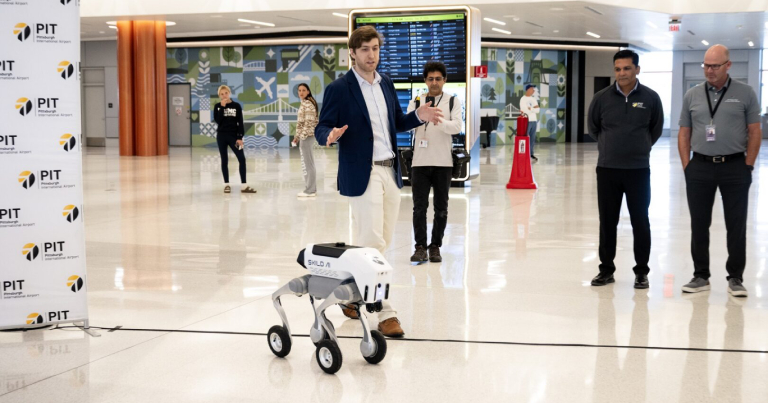
Pittsburgh International Airport (PIT), a Corporate Partner of the FTE Digital, Innovation & Startup Hub, is elevating its use of cutting-edge technology through the xBridge innovation program. The program is currently delving into how robotics, artificial intelligence (AI), and computer vision can revolutionize airport operations, efficiency, and customer service. The airport has formed partnerships with technology companies like Skild AI and Arrow Analytics to test and evaluate these innovative solutions in real-world airport settings, with the aim of exploring potential applications within the aviation industry.
As stated by Deepak Nayyar, Executive Vice President and Chief Technology Officer at PIT, Pittsburgh’s strong presence in robotics and AI makes it an ideal environment for fostering innovation that can transition from the lab to practical implementation at airports, ultimately shaping the industry’s future. One of the initiatives involves collaborating with Skild AI to test quadruped autonomous robots in the Airside Terminal. Equipped with sensors, cameras, and AI technology, these robots navigate the terminal to monitor air quality and can potentially assist in waste management, spill detection, and passenger flow analysis.
Additionally, PIT is partnering with Arrow Analytics and Southwest Airlines to trial the EZ-Board technology at Gate A7. This system employs depth cameras and real-time analytics to track the movement of carry-on bags during boarding, providing valuable insights to streamline the process and optimize overhead bin usage. The collaboration aims to enhance operational efficiency and improve passenger experience by utilizing data-driven technologies.
Such collaborations highlight PIT’s commitment to using its airport as a testbed for emerging technologies, propelling innovations into practical applications within the aviation sector. By integrating autonomous systems and data-driven solutions, airlines and airports can streamline operations, enhance customer service, and adapt to the evolving demands of the industry. The projects at PIT reflect the airport’s forward-thinking approach to embracing technological advancements and fostering a culture of innovation within the aviation landscape.
In conclusion, through strategic partnerships and innovative trials, Pittsburgh International Airport is at the forefront of redefining the passenger experience and enhancing business performance by embracing emerging technologies such as robotics, AI, and computer vision. These initiatives underscore the airport’s dedication to driving industry innovation and transforming the way airports operate in the digital age, ultimately creating a more efficient and seamless travel experience for passengers.
About the Author