The Defense Secretary, Pete Hegseth, has recently unveiled a significant development in the military landscape by announcing the establishment of a new military command known as the Autonomous Warfare Command, or AutoWarCom. This initiative underscores the military’s shift towards leveraging autonomous and robotic technologies in combat operations. The announcement was made during Hegseth’s State of the Force address at Quantico, Virginia on September 30. The command, to be led by a four-star officer, will focus on expanding the use of autonomous and robotic capabilities across the US armed forces. AutoWarCom will be the latest addition to the existing 11 combatant commands, with the most recent being the US Space Command established in 2019.
In the rapidly evolving landscape of warfare, characterized by advancements in technology and changing tactics, Hegseth emphasized the need for adapting to these changes swiftly. He highlighted the impact of technological advancements such as cheap computation, superintelligence, and advanced commercial manufacturing, enabling the proliferation of low-cost, high-precision strike capabilities. The establishment of AutoWarCom aims to accelerate the development and deployment of autonomous and semi-autonomous systems within the military.
The Pentagon’s goal is to operationalize AutoWarCom by October 1, 2027, following the necessary authorization from Congress. The command’s scope will encompass drones, artificial intelligence, and command and control systems, although specific details regarding its leadership and structure are yet to be defined. Hegseth also emphasized the importance of introducing military specialties focused on autonomy to create dedicated career paths within this emerging field.
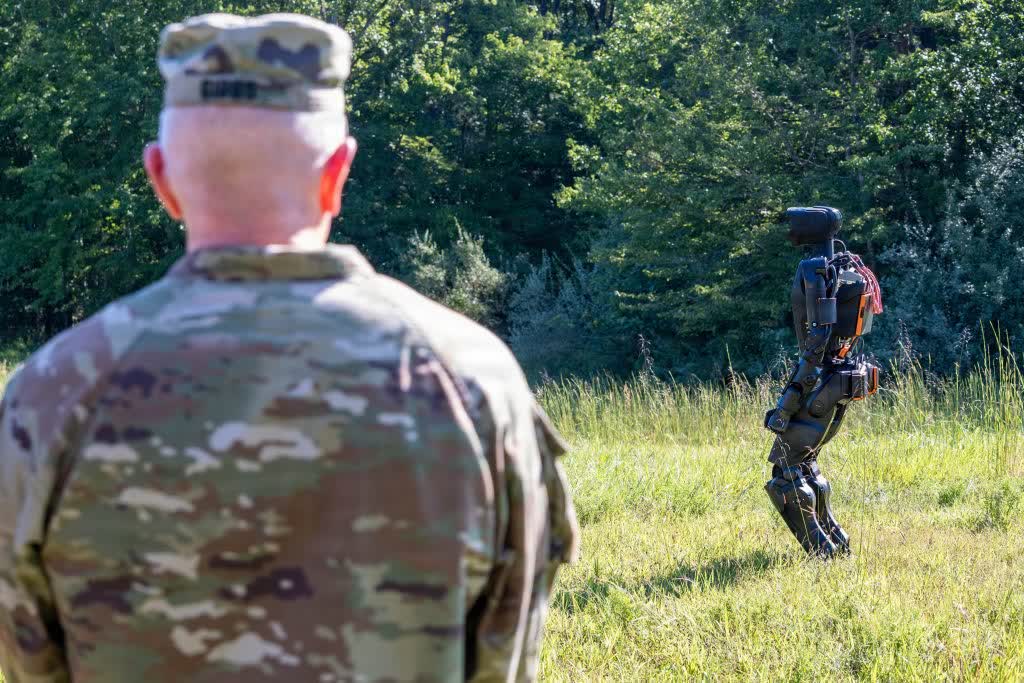
The growing significance of autonomous technologies in military operations is further evidenced by the integration of humanoid robots in military activities. Recent reports revealed that the Army selected winners in the xTechHumanoid competition, showcasing robots like Alex from the Florida Institute for Human and Machine Cognition, designed for hazardous missions with features like ballistic protection and AI-human control integration.
As the US military advances its autonomous capabilities, rival nations like China are also exploring humanoid robots for various military applications, including reconnaissance and logistics. The increasing role of artificial intelligence in military affairs extends beyond controlling machines to encompass areas such as intelligence analysis, logistics management, and targeting. However, the reliance on AI-driven reports can also lead to critical errors, as seen in a recent incident where US forces nearly intercepted a Chinese vessel due to a false identification based on an AI-assisted intelligence report.
The development of AutoWarCom and the integration of autonomous technologies underscore the evolving nature of modern warfare, where technological advancements play a crucial role in shaping military strategies and operations.
About the Author