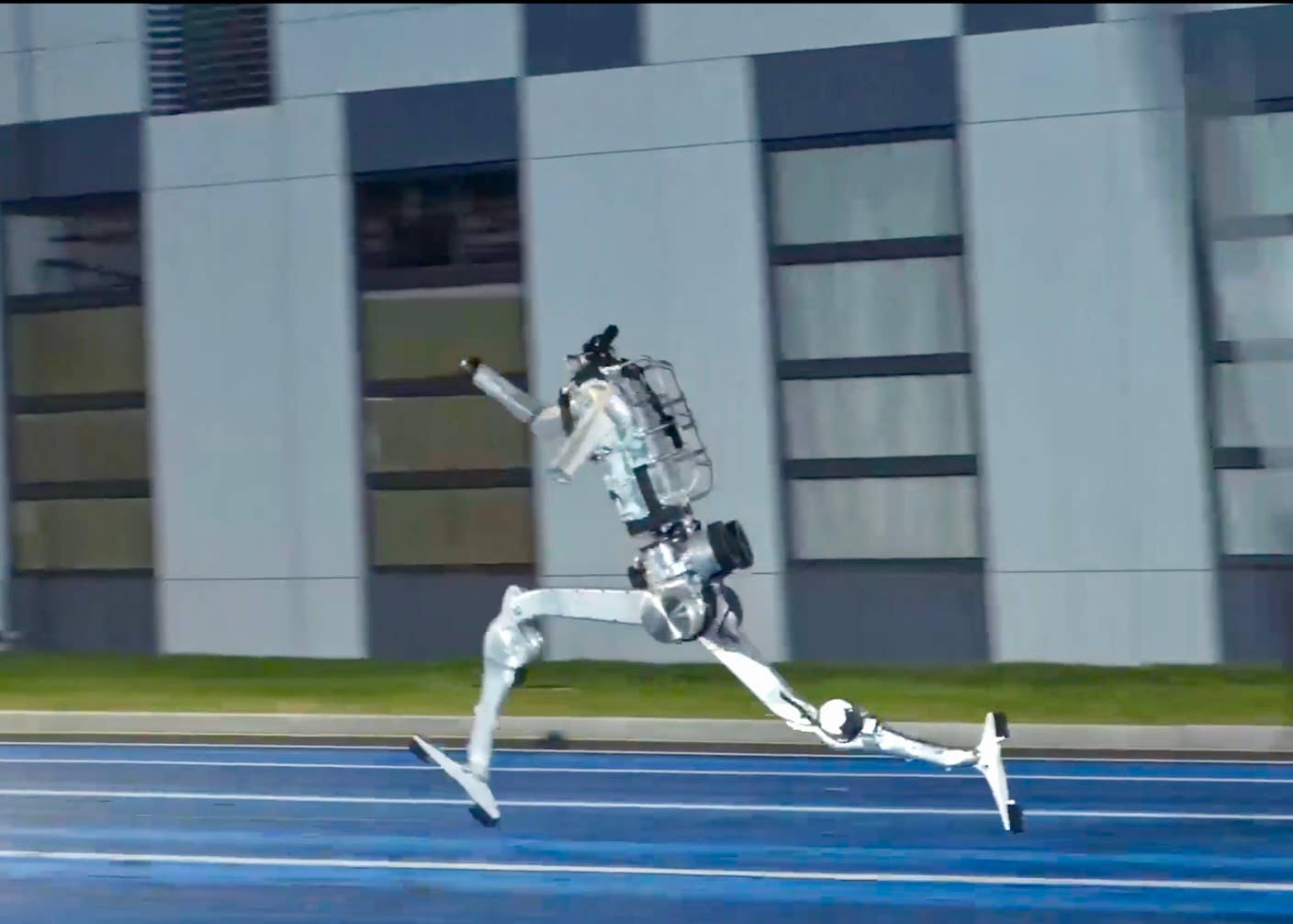
A cutting-edge company that recently went public with a highly successful IPO is making waves in the field of humanoid robot development. Chinese robotics firm, Unitree, has unveiled its latest creation, the “Superman” robot, capable of running at an impressive speed of 12.66 meters per second, surpassing the record set by the legendary sprinter Usain Bolt. The achievement showcases the remarkable progress being made in the realm of humanoid robotics, where agility and athleticism are key markers of advancement.
Creating a humanoid robot capable of running at high speeds has long been a complex engineering challenge that has captivated roboticists for decades. Sprinting and jumping have become popular benchmarks for companies in the robotics industry to showcase their technological prowess. Unitree’s “Superman” robot not only outpaces the fastest human sprinter but also exhibits a vertical jump of approximately 6 feet 7 inches from a standing position, exceeding human capabilities.
Despite the robot’s relatively short legs at 2 feet 9 inches, resulting in a somewhat clumsy running motion, Unitree’s achievement is remarkable and cements the company’s position as a frontrunner in the field of humanoid robotics. The timing of the announcement just before the company’s IPO and the World Humanoid Robot Games underscores Unitree’s strategic focus on innovation and market presence.
While Unitree’s technological breakthrough has garnered significant attention, some analysts warn of the high investment risk associated with the company’s IPO. The firm’s revenue mainly stems from research and demonstrations, with broader applications still in the developmental stages. Nonetheless, Unitree’s dominance in the humanoid robot market, where Chinese companies control a significant share, is undeniable.
The success of Chinese robotics firms like Unitree is attributed to factors such as policy support, public investment, a mature supply chain, and advancements in AI software and hardware. In response to China’s stronghold in the industry, the US recently imposed restrictions on the import of foreign-made humanoid and quadruped robots for national security reasons. This move highlights the competitive dynamics in the global robotics market, with China leading the race in humanoid robot development.
Despite regulatory challenges, companies like Unitree are propelling the evolution of humanoid robotics, setting new benchmarks in agility and performance. As the industry continues to advance, the race for technological supremacy between nations is intensifying, reshaping the future of robotics. Stay updated on the latest groundbreaking technologies and visionary insights by subscribing to SingularityHub, your guide to the technological frontier.
About the Author