Stay up-to-date with the latest developments in Science and Innovation across the vibrant Glasgow City region through our weekly newsletter. Our newsletter delivers the most current news and exciting events in the region in an easily digestible format. Signing up is simple and can be done below. You can opt-out at any time by clicking the provided link in the email footer. For more details regarding our privacy practices, please refer to our privacy policy page.
Recent research suggests that giving robot companions animal-like or anime-style faces and voices can enhance their emotional appeal to users, potentially revolutionizing the field of social robotics. Social robots, such as the Qoobo with its soft body and swinging tail, offer companionship and comfort by imitating human or pet-like behaviors. Despite the rapid growth of this tech sector, minimal academic research has focused on optimizing robot designs to maximize expressiveness and emotional engagement.
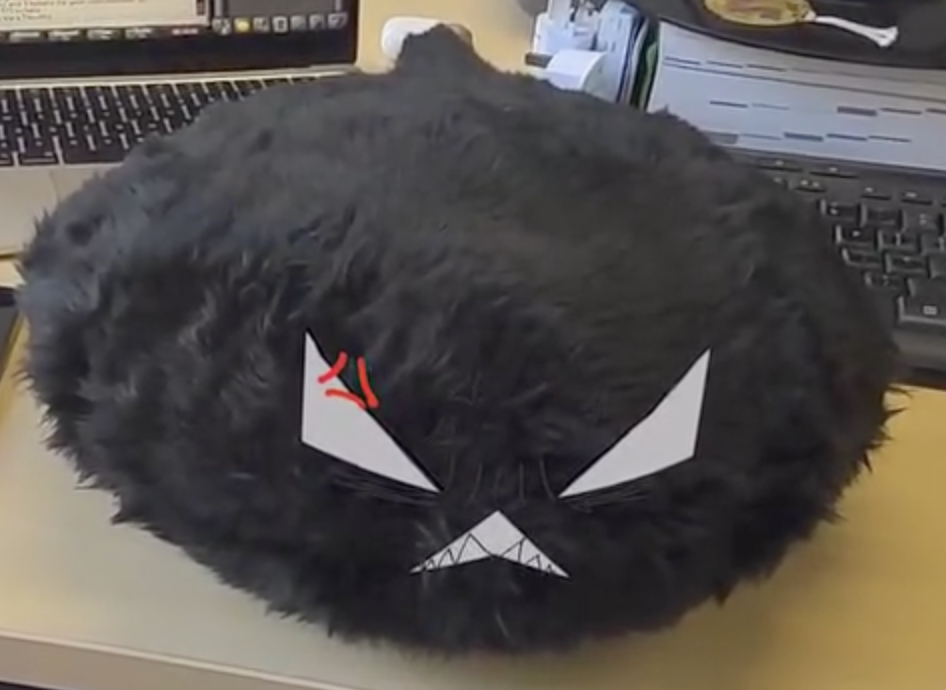
Researchers from the University of Glasgow are at the forefront of bridging this research gap. They utilized augmented reality technology to experiment with various combinations of faces and voices on the Qoobo robot. Dr. Shaun Macdonald and Josh Yip of the School of Computing Science led this innovative project, aiming to gauge users’ emotional responses and interactions with these virtual robots.
The study’s results emphasized the importance of aesthetics in designing social robots. By incorporating elements inspired by animals, robots, emojis, and anime, researchers created diverse prototype faces and vocalizations. Volunteers evaluated these prototypes through AR headsets, ranking them based on emotional expression clarity, empathy evocation, and overall appropriateness.
Surprisingly, anime-like faces proved to be as engaging as animal-inspired ones, showcasing the potential for expressive design beyond traditional boundaries. Expressiveness was predominantly conveyed through facial features over vocalizations, with human sounds recognized for their emotional nuances. Notably, preferences were influenced by participants’ pet ownership, indicating varying perceptions of robot companions based on personal experiences.
The research outcomes emphasize the significance of combining visually appealing faces with emotionally resonant voices to enhance users’ emotional connections with social robots. These insights have the potential to inform the development of customizable robots tailored to individual preferences using augmented reality overlays, thereby advancing the field of social robotics.
The research findings will be presented at the ACM International Conference on Mobile Human-Computer Interaction in Swansea, Wales, on Thursday, 3 September. The project received support from the University of Glasgow’s EPSRC Impact Acceleration Account and the Engineering and Physical Sciences Research Council (EPSRC). For further inquiries, you can reach us at T: 0141 420 5010 or E: info@glasgowcityofscienceandinnovation.com. Copyright © 2026 Glasgow City of Science and Innovation. Site designed by Maguires.
About the Author