A humanoid robot innovation center located in Ningbo, Zhejiang Province, China, is dedicated to developing practical robots tailored for industrial and commercial purposes. The center has already successfully deployed one of its robot models at a plant of a prominent European home appliance manufacturer. Established in December 2023, the Zhejiang Humanoid Robot Innovation Center operates with the backing of the Ningbo municipal government and is spearheaded by a team led by Professor Xiong Rong from Zhejiang University.
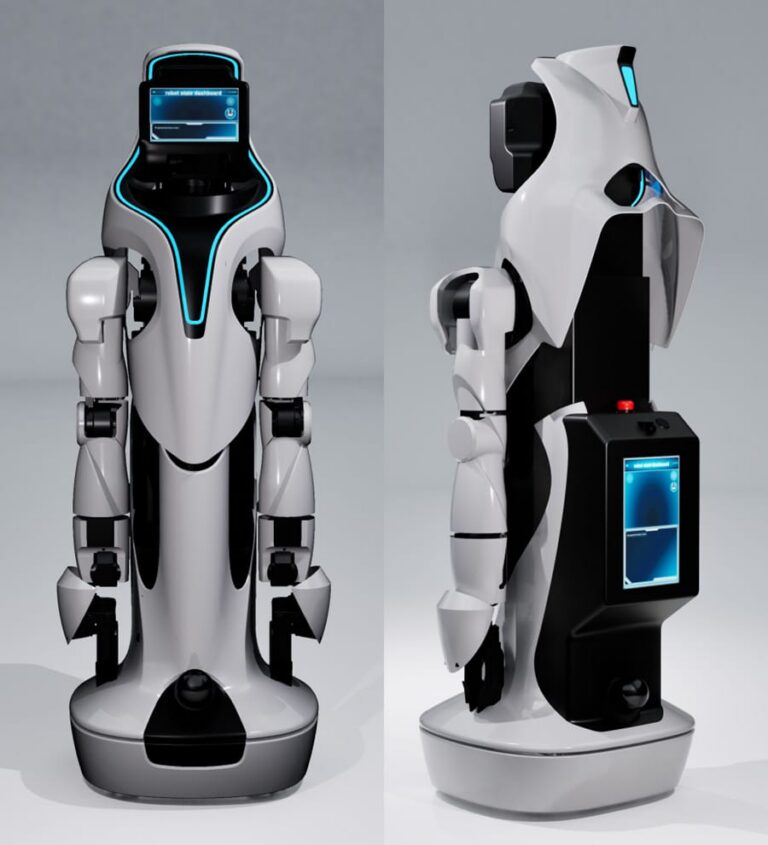
The primary focus of the center revolves around advancing embodied intelligence technologies and creating humanoid robots designed specifically for industrial applications. Professor Xiong, the chief scientist of the center, emphasized that their objective is to design robots that can perform real work effectively, especially tasks requiring precision, which are challenging to automate, labor-intensive, or hazardous. The center has introduced the NAVIAI product line, featuring robots capable of assuming the role of “smart store managers” in retail settings by retrieving products from shelves and carrying out a variety of tasks in chemical laboratories, such as sampling, analysis, and cleaning.
One standout model from the NAVIAI series is the bipedal humanoid robot NAVIAI-I2, known for its exceptional positioning accuracy of 0.03 millimeters. This robot has been successfully integrated into the production operations of Beko, a prominent European home appliance brand, at its facility in Turkey. The collaboration with Beko signifies a milestone, with the Chinese-made humanoid robot marking its entry into overseas markets.
Xu Xuecheng, the vice general manager and chief technology officer of the center, highlighted the rigorous testing and simulations conducted before deploying the robots to ensure seamless operational performance. Feedback received from the production site in Turkey is instrumental in enhancing the robot designs further. The center remains optimistic about its expansion into global markets, particularly in labor-intensive industries in Southeast Asia, witnessing an upsurge in demand for automation solutions.
To bolster its endeavors, the center has established an industry alliance comprising 88 suppliers from Ningbo and over 200 nationwide. Meanwhile, Ningbo is intensifying its strides in the embodied intelligence sector, aiming to cultivate an ecosystem that harmonizes AI models, hardware manufacturing, and a diverse array of practical applications. This strategic evolution underscores the region’s commitment to fostering innovation and technological advancements in the field of robotics.
About the Author