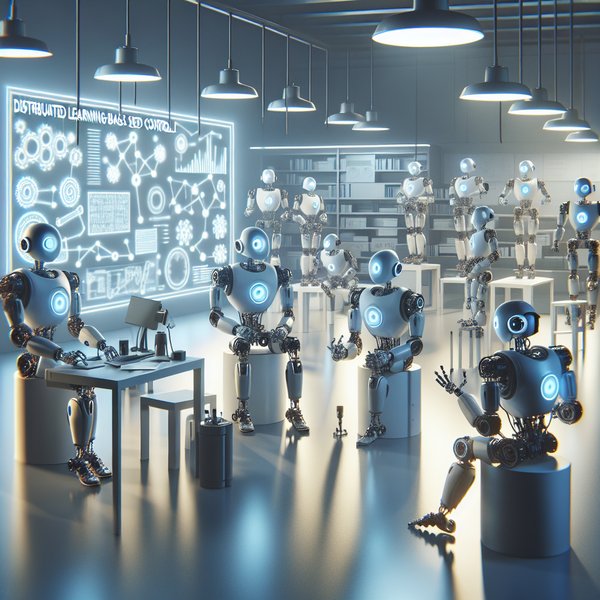
Recent advancements in robotics have paved the way for quadrupedal robots becoming a common sight. Engineers are continuously exploring the potential of these machines, and a group of researchers from MIT suggests that employing artificial intelligence (AI) could enhance their functionality, particularly in the aspect of locomotion.
Traditionally, engineers develop sets of rules dictating how legged robots should respond to various inputs to control their movements. However, coding these parameters is a complex and time-consuming process. Instead, the MIT researchers opted for a machine learning approach, specifically reinforcement learning, where the AI model is set a goal and allowed to learn through trial and error. This method enables the AI to develop its unique running style, optimizing for speed.
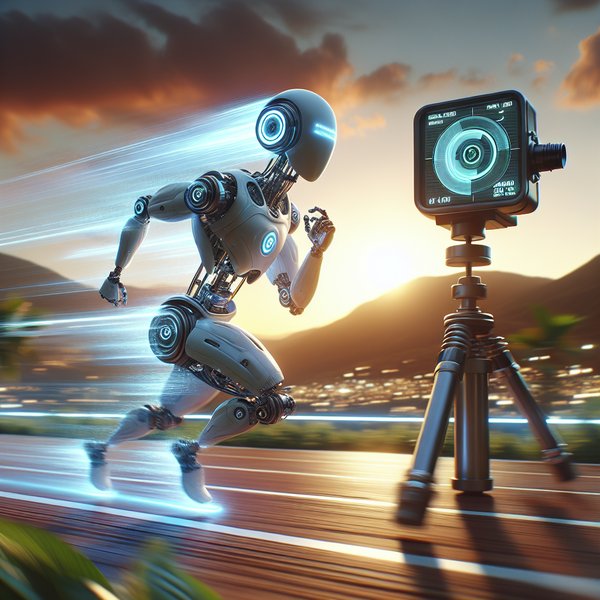
Using reinforcement learning, the researchers at MIT developed new software for their quadruped robot, Mini Cheetah, achieving a remarkable top speed of 3.9m/s. While the robot’s running gait may appear awkward, the focus was solely on speed optimization. The researchers emphasize that instructing the AI to develop a more natural-looking gait is possible but was not the primary objective.
One significant advantage of employing AI in creating robot controllers is the reduced time and effort compared to traditional manual programming. By utilizing simulations, engineers can expose the robot to various virtual environments, enabling it to adapt and learn autonomously. This approach allows for rapid progress in robot development, as demonstrated by the MIT group’s simulator completing extensive training in just a fraction of real-time.
While some companies, like Boston Dynamics, continue with traditional methods to design controllers for legged robots, the trend towards AI-driven approaches is gaining traction. AI presents a promising avenue for advancing the capabilities and efficiency of robots, as seen in MIT’s successful application on Mini Cheetah.
As the field of robotics evolves, the integration of AI technologies holds the potential to revolutionize how robots are designed, controlled, and optimized for various tasks. Despite the existing records set by other robots, the combination of AI and robotics continues to push the boundaries of what these machines can achieve, offering exciting possibilities for future advancements in this field.
About the Author