For over a decade, Elon Musk and Mark Zuckerberg have engaged in a relentless technological rivalry. Musk, the head of Tesla and SpaceX, has established his influence in electric cars, reusable rockets, and more recently, generative artificial intelligence. Meanwhile, Zuckerberg, the founder of Meta, propelled Facebook to become a global social network before focusing on virtual and augmented reality. Their new battlefront is humanoid robots.
Musk’s strategy revolves around mechanical power. His robot, Optimus, aims for mass production with plans for millions of units by 2030, intended for both factories and households. However, the ambition presents monumental challenges: creating reliable, accessible, and industrially scalable humanoids requires reinventing assembly lines and overcoming immense logistical constraints. On the other hand, Zuckerberg takes a different approach with Metabot. Here, the focus is not on muscles but on the brain. Developed by Meta’s teams, this robot relies on AI capable of learning and reasoning, with simple mechanical effectors. The concept is clear: akin to a smartphone’s value lying in its applications, software makes the machine versatile.
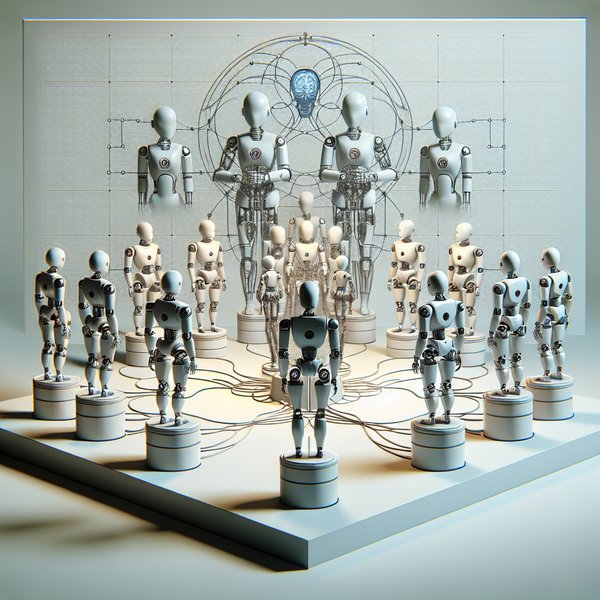
Zuckerberg’s stroke of genius lies in an open platform for developers and hardware manufacturers. Rather than Apple’s closed approach, Meta draws inspiration from Android’s success: offering a universal software layer to animate different robots without crafting each device. To realize this vision, Meta has recruited experts from MIT and industrial robotics, investing heavily through Reality Labs and Superintelligence Labs. The goal is to establish a software standard for robotics, akin to Android in mobile phones.
Fundamentally, this face-off embodies two philosophies: Musk aims to build an advanced mechanical body, while Zuckerberg seeks to provide an adaptable digital mind. Success hinges on market adoption. If Optimus proves its efficiency in factories, it could revolutionize global productivity. If Metabot and its software become the standard, Meta could equip far more robots than it manufactures. Stay updated on the latest Tech and New Media news in Africa on Socialnetlink. Technological news and startups in Senegal and across Africa focusing on Digital- Technologies- Innovation- Startups- Senegal- Africa- Scholarships and Job Opportunities.
About the Author