Stay informed with Vox to decipher the world’s news as it happens. Our mission is to assist you in navigating the complexities of current events – a task that is more crucial than ever. However, we cannot achieve this alone. We rely on the support of dedicated readers like you to sustain our journalism. Will you join us as a Vox Member today?
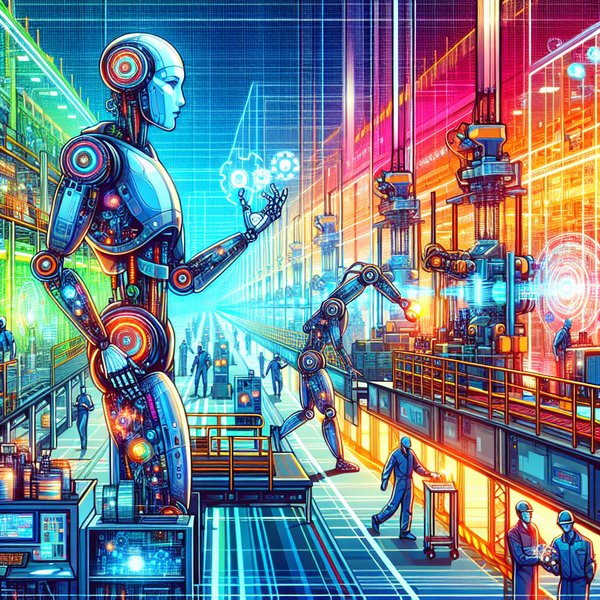
The concept of humanoid robots has intrigued many, but do we truly desire them? The sight of a humanoid robot, in a powered-down state lying helplessly on the floor, can evoke a feeling of melancholy. These sophisticated machines, once hailed for their agility and capabilities, have become increasingly common since Atlas gained fame on YouTube. Boston Dynamics, the creator of Atlas, has developed newer versions that exhibit remarkable abilities, such as picking up and dropping objects with artificial intelligence control, paving the way for their integration into industrial settings and beyond.
The proliferation of humanoid robots is on the horizon, with predictions suggesting a significant surge in global sales for various purposes, primarily industrial and commercial. While some anticipate that humanoid robots might eventually replace human labor, there are varied visions for their application. Startups are even introducing home robots like Neo and Figure 03 to assist in domestic chores and even barista duties.
Despite the promising demonstrations of AI-powered robots, the reality of their integration into daily life remains a work in progress. Challenges such as the need for human intervention, limitations in dexterity and cognition, and significant energy consumption hinder the seamless integration of humanoid robots into real-world scenarios.
Innovations in artificial intelligence are driving advancements in robotics. Researchers are exploring novel methods, such as liquid neural networks and linear optical networks, to develop AI models that closely emulate how the human brain processes information. These state-space models offer more efficient and impactful solutions, especially in demanding tasks like autonomous driving.
The future of humanoid robots may not be immediate but offers a glimpse into a realm where intelligent machines could coexist with humans. As we navigate this intersection of AI and robotics, continuous advancements in technology hold the key to unlocking a new era of possibilities. Embracing these changes with caution and emphasizing the need for better AI to enhance the capabilities of robots can pave the way for a future where humanoid robots might play a more significant role in our lives.
About the Author