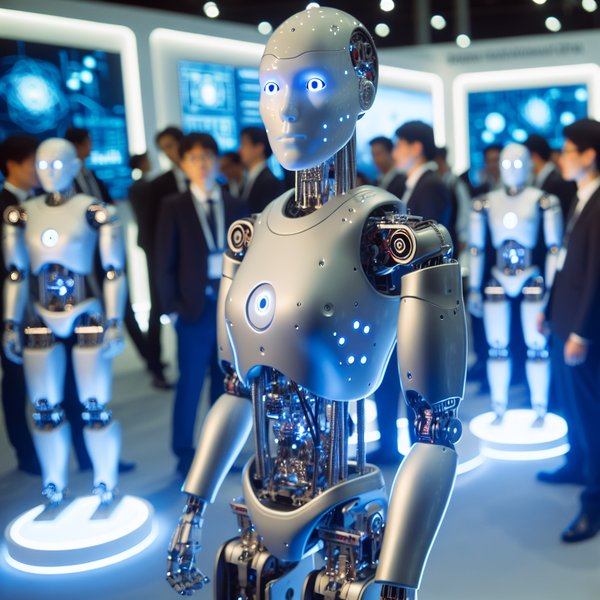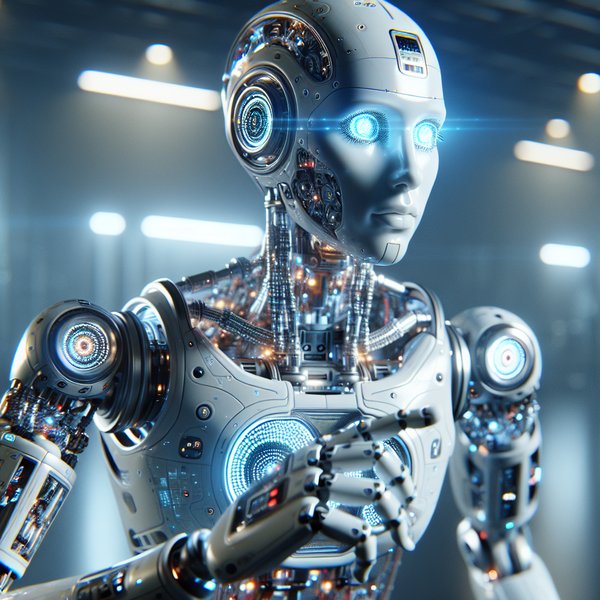
Boston Dynamics has kicked off 2026 by unveiling the latest generation of its humanoid robot, Atlas. The renowned Atlas from Boston Dynamics, now a part of Hyundai, has long been a standout in the field of humanoid robots. Despite losing ground to numerous competitors in the past year, the company has not been idle. It has recently introduced the newest iteration of Atlas, a variant poised for mass production and commercialization.
The revamped Atlas, now fully electric, has undergone several adjustments to make it less like a Hollywood-esque robot and more akin to an efficient working machine. Standing at 1.88 meters tall and weighing 90 kilograms, this Atlas boasts 56 axes of movement, a 4-hour battery life (with self-swappable batteries), the capability to lift loads of up to 50 kilograms, and reach objects at a height of 2.3 meters. Boston Dynamics asserts that it is suited for operation in various environments, withstanding temperatures ranging from -20°C to 40°C, and being highly water-resistant.
Unlike merely mimicking human movements, the new Atlas leverages its superhuman capabilities, allowing it to execute rotations and movements at an accelerated pace. It features a sophisticated safety system that continuously assesses its surroundings and adjusts its behavior, including the ability to recognize nearby individuals. Hardware-wise, Boston Dynamics utilizes Nvidia chips, while for software components, the company has collaborated with Google Deepmind to leverage their expertise in artificial intelligence.
The human-sized Atlas is currently undergoing operational trials at one of Hyundai’s factories, autonomously performing tasks in the parts warehouse without human intervention. This successful testing has led Hyundai to envision a substantial increase in the deployment of robots over the coming years, with the goal of producing 30,000 robots annually by 2028. This development signals the official commencement of humanoid robots in factory settings. If predictions hold true, the challenge may shift from the adoption of these robots to the speed at which they can be manufactured.
In conclusion, the deployment of humanoid robots in industrial settings is gaining momentum, and with the continuous advancements in technology and automation, the future promises an exciting shift towards increased efficiency and productivity.
About the Author