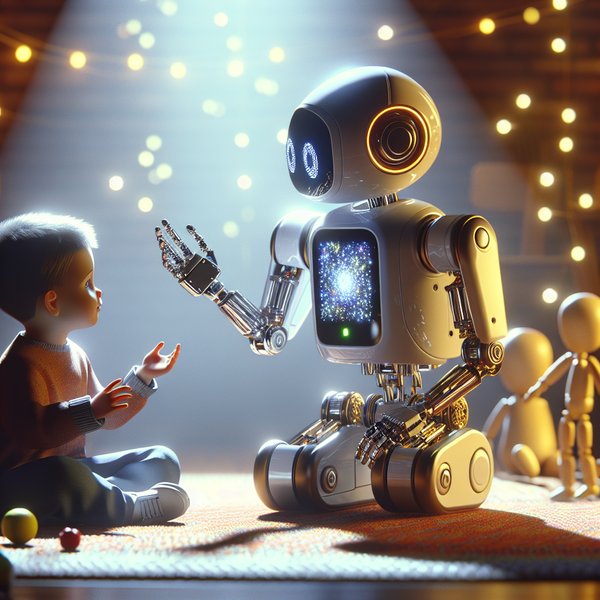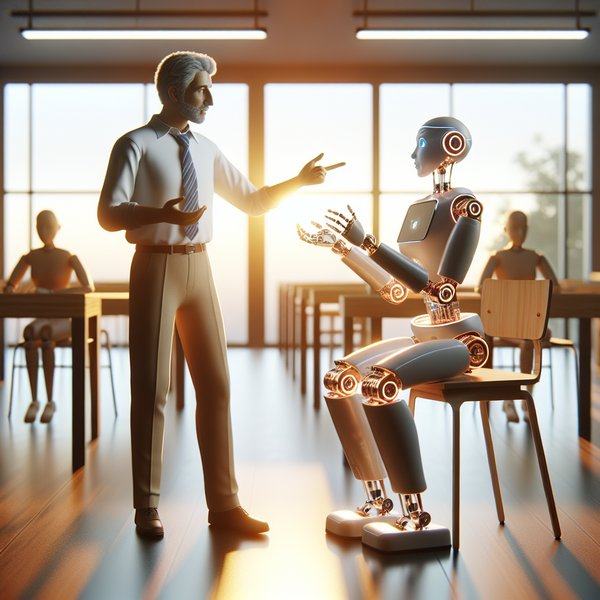
In the ever-evolving realm of educational technology, a recent study is making waves by suggesting that social robots could play a significant role in assisting children to overcome the anxiety associated with reading aloud. Researchers at the University of Chicago have explored how these nonjudgmental robots could provide a secure environment for young learners to practice, potentially revolutionizing the dynamics within classrooms.
The study, published in Science Robotics, revealed that children demonstrate fewer signs of anxiety, such as reduced skin conductance, when reading to a robot as opposed to a human listener. Elementary school students were involved in the study, reading passages to either a small robot companion or an adult. Through monitoring stress indicators and self-reported feelings, the team discovered that robots fostered a relaxed setting, fostering fluency without the fear of criticism.
The essence of this research lies in the Human-Robot Interaction Lab at the University of Chicago, under the guidance of Assistant Professor Sarah Sebo. PhD student Lauren Wright, who led the project, collaborated with experts from the University of Illinois Chicago and the University of Wisconsin–Madison to craft experiments that mimic real classroom settings. The robots were programmed to respond empathetically, nodding or providing encouraging sounds, aiding in building children’s confidence gradually.
Furthermore, the study suggests that these social robots could complement teachers by conducting repetitive practice sessions, particularly beneficial for children with social anxieties or learning disabilities. Although challenges such as costs, privacy, and teacher training need to be addressed for wider adoption in schools, the UChicago team emphasizes that robots are tools to enhance educators’ efforts, especially in resource-constrained districts.
Looking into the future, the study offers promise for more advanced AI-driven companions. By incorporating natural language processing, robots could offer real-time pronunciation assistance or comprehension questions, hinting at broader applications in edtech integration. The research could inspire investments in educational technology, particularly for companies developing social robots, aiming to blend empathy with education.
Ethically, ensuring equal access to such technology is essential, considering not all schools may afford high-end robots. The emotional impact of forming positive associations with learning through robot interactions could potentially reduce dropout rates in literacy programs. This UChicago-led initiative highlights a paradigm shift where technology provides not just efficiency but emotional support in the learning process.
As subsequent studies expand on these findings, the integration of robots into classrooms may become more commonplace, fostering a generation of confident readers. The research underscores the potential of technology to transform educational experiences, providing emotional support alongside academic assistance.
About the Author