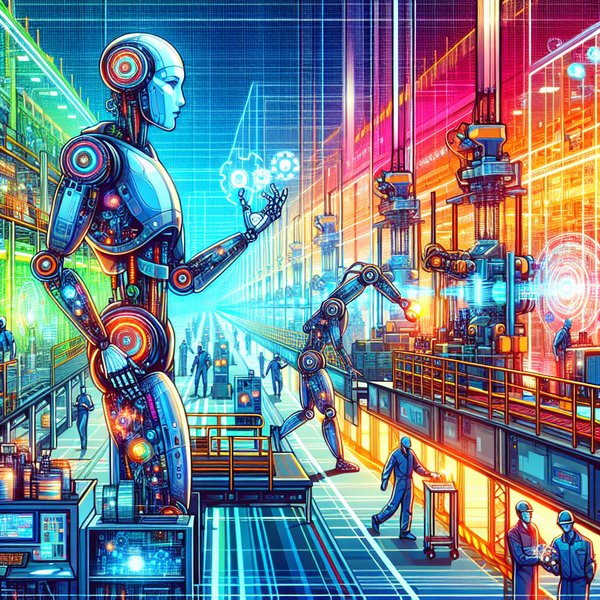
In the quest to develop robots that resemble and behave like humans, engineers have made significant progress in artificial intelligence technology. This advancement is now transitioning humanoids from laboratory experiments to practical use on factory floors. As concerns arise about AI impacting job displacement, a global competition is unfolding to create human-like robots capable of performing various human tasks.
Key players in this race include Tesla, startups supported by tech giants like Amazon and Nvidia, and state-backed Chinese enterprises, with Boston Dynamics leading the pack. Hyundai, a South Korean automaker, holds a major stake in Boston Dynamics and recently showcased its humanoid creation, Atlas, at a new factory near Savannah, Georgia. This demonstration revealed a near-future where humanoids work alongside humans in manufacturing settings.
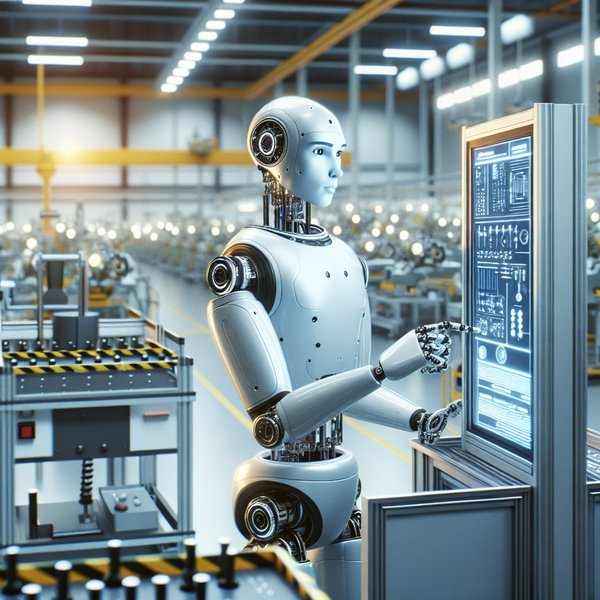
With a height of 5’9″ and weighing 200 pounds, Atlas is powered by artificial intelligence developed by Boston Dynamics. The robot, which has previously stayed confined to labs, was observed autonomously performing tasks, such as sorting roof racks, marking a significant step in integrating humanoids into real-world work environments.
Boston Dynamics has significantly evolved Atlas since our last encounter in 2021, transforming it into a sleeker, all-electric model with an AI brain powered by advanced Nvidia microchips. Atlas is now capable of executing remarkable feats independently, such as running and jumping effortlessly. Moreover, the robot is engineered to learn through experience, adopting supervised learning and motion capture techniques to enhance its capabilities.
The CEO of Boston Dynamics, Robert Playter, expressed enthusiasm about the potential of creating robots with general-purpose intelligence, facilitated by AI advancements. Despite concerns about superhuman capabilities and job displacement, experts like Playter emphasize that humanoids will require continuous management and servicing by humans. As technology rapidly progresses, the horizon for humanoid robots appears promising, signaling a fascinating future where robots coexist and collaborate with humans seamlessly.
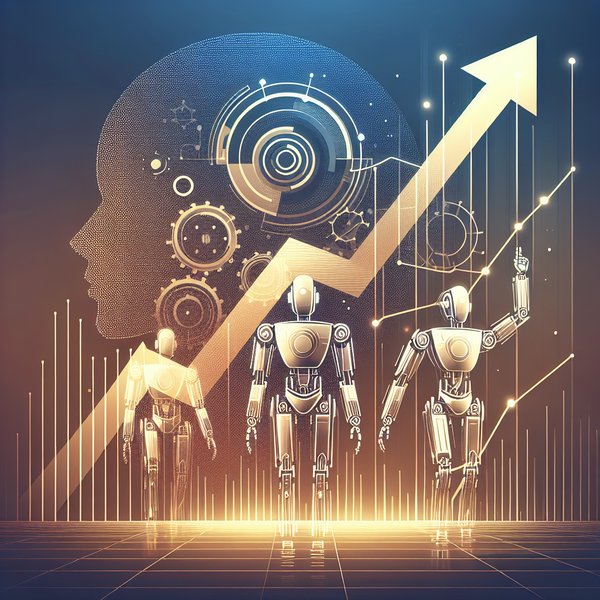
As the competition intensifies in the robotics industry, the market for humanoids is projected to soar to $38 billion within the decade, driving innovation and technological advancement. With companies from various countries vying for supremacy, the field of robotics is set to witness groundbreaking developments that will reshape industries worldwide.
About the Author