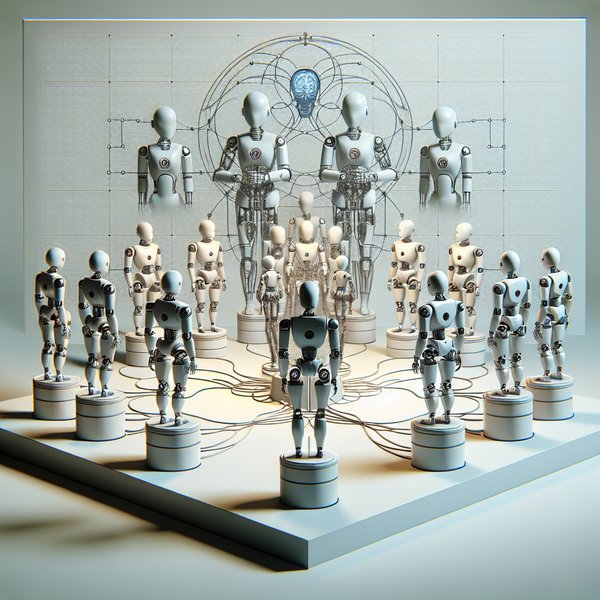
Recent research suggests that people may perceive robots as capable of independent thought when they exhibit human-like behaviors and emotions. Agnieszka Wykowska, PhD, from the Italian Institute of Technology, emphasizes the importance of understanding how interactions with robots displaying human-like behaviors can influence the attribution of intentional agency to the robots.
The study, published in the journal Technology, Mind, and Behavior, involved three experiments with 119 participants interacting with a human-like robot named iCub. Participants were asked to assess the robot’s actions as either mechanical or intentional based on different scenarios. The researchers controlled the robot’s behavior to behave in a social manner in the first two experiments, establishing eye contact and displaying emotions during video-watching sessions with the participants.
Results indicated that participants who engaged with the human-like robot were more inclined to perceive its actions as intentional rather than programmed, unlike those who interacted with a more machine-like version of the robot. This suggests that the mere presence of a human-like robot is not sufficient for attributing thoughts and emotions; it is the human-like behavior that plays a vital role in perceiving the robot as an intentional agent.
Wykowska highlights that artificial intelligence can be seen as capable of independent thought if it convincingly mimics human behaviors. This insight could influence the design of future social robots, particularly in contexts like elderly care. Establishing social bonds with robots may enhance compliance with recommendations, such as medication intake.
The research signifies the potential benefits of social bonding with robots and underlines the need to identify contexts where attributing intentionality to AI could positively impact human well-being. This understanding is crucial for advancing research in this field and could pave the way for the development of more effective and beneficial human-robot interactions.
About the Author