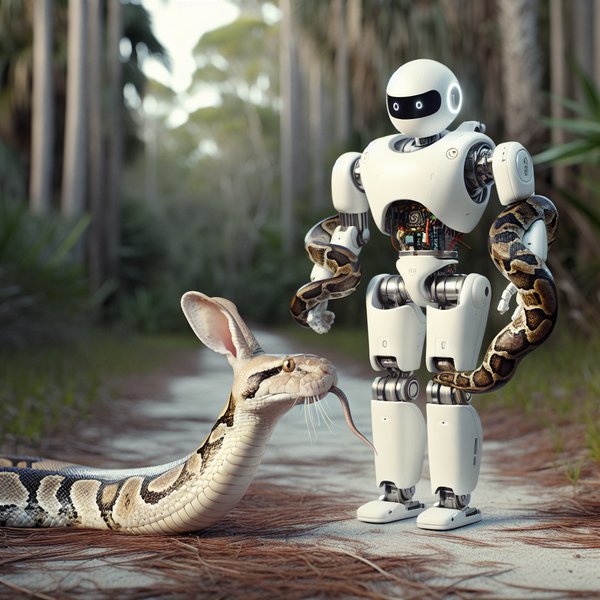
A water management district in Florida’s Everglades has deployed robot rabbits to assist in monitoring and controlling the population of invasive Burmese pythons. These snakes have caused significant harm to native wildlife in the region. These solar-powered robotic rabbits were released into the Everglades following the annual Florida Python Challenge, a popular 10-day event that attracts numerous snake hunters aiming to reduce the number of invasive pythons.
Despite their whimsical appearance, the robot bunnies are equipped with an artificial intelligence-powered camera that can detect pythons. Once a python is spotted, the camera alerts officials from the South Florida Water Management District, who then dispatch someone to capture the snake. The robots are designed to move like real rabbits and emit heat signatures and scents resembling those of live rabbits, which attract pythons during hunting.
Burmese pythons in Florida can grow up to 18 feet long and have been known to consume entire deer. The population of these non-native snakes has surged since their introduction in the 1990s, with estimates suggesting a significant increase in their numbers. Efforts to curb their population have resulted in over 19,000 pythons being removed from the Everglades since 2000, with events like the Florida Python Challenge aiding in this conservation work.
Winners of the Florida Python Challenge, such as last year’s champion who eliminated 20 pythons, have received substantial cash prizes. These snakes are not protected by Florida’s wildlife laws and can be killed at any time without a hunting permit, given their threat to local ecosystems. The impact of pythons on native species in the Everglades has been severe, leading to a drastic decline in populations of animals like raccoons and possums, which are easy prey for these large snakes.
In conclusion, the utilization of robot rabbits represents a novel approach in managing the invasive python population in the Everglades, offering a high-tech solution to protect the region’s vulnerable wildlife from further harm.
About the Author