In the fast-paced world of robotics, a groundbreaking development is reshaping how machines learn to interact with their surroundings. Researchers have introduced a new system that merges reinforcement learning with advanced robotic vision, enabling robots to excel in intricate manipulation tasks with significantly reduced reliance on human-provided demonstration data. This innovation not only expedites the learning process but also allows robots to innovate beyond their initial training, uncovering more efficient movement patterns that might be unexpected by humans.
At the heart of this advancement lies a sophisticated algorithm that rewards robots for successful actions while penalizing failures, all based on visual inputs. By simulating trial-and-error in real-time, the system enhances vision-action skills, translating raw pixel data into precise motor commands. This approach represents a notable departure from traditional methods that require extensive pre-programmed examples, with potential implications for industries ranging from manufacturing to healthcare.
Recent reports underscore how this technology empowers robots to venture into unexplored realms of motion. For instance, in tasks like grasping irregular objects or navigating cluttered environments, the system evolves rather than merely mimics. According to an article in Quantum Zeitgeist, combining reinforcement learning with vision facilitates “learning complex manipulation tasks with less human demonstration data and even discovering new, more efficient movement patterns.” This self-improvement capability resembles how animals adapt in nature but is tailored for mechanical precision.
Industry insiders recognize that such advancements address longstanding challenges in robotics, where data scarcity has impeded scalability. By reducing the need for human supervision, this method has the potential to democratize the deployment of robots in small-scale operations, from warehouse automation to personalized assistive devices.
Building on this progress, a study published in the International Journal of Robotics Research highlights the potential of reinforcement learning to equip robots with “humanoid perception and decision-making wisdom.” Practical applications are already emerging, such as AI-driven robots at UC Berkeley learning tasks quicker with human feedback, showcasing how vision-guided reinforcement learning handles delicate real-world interactions.
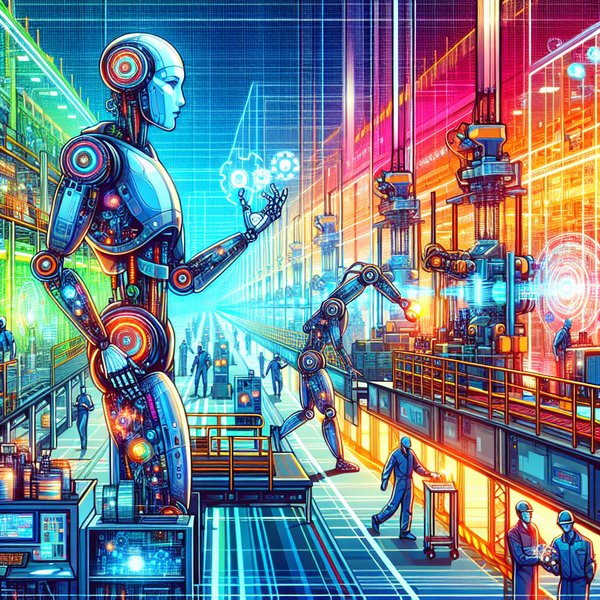
While scaling these vision-action skills poses challenges like the need for substantial computational power and ensuring safety in unpredictable environments remains crucial, industry leaders see this breakthrough as a move towards more adaptive systems. Imagine assembly lines where robots optimize workflows autonomously, decreasing downtime and costs.
As these technologies mature, ethical concerns around equitable access and potential job displacement warrant attention. Nevertheless, the fusion of vision and action through reinforcement learning promises a future where robots evolve continuously to meet human needs, becoming intelligent partners rather than mere tools. Ongoing research from esteemed institutions indicates that robotics is stepping into an era of unparalleled autonomy.
About the Author