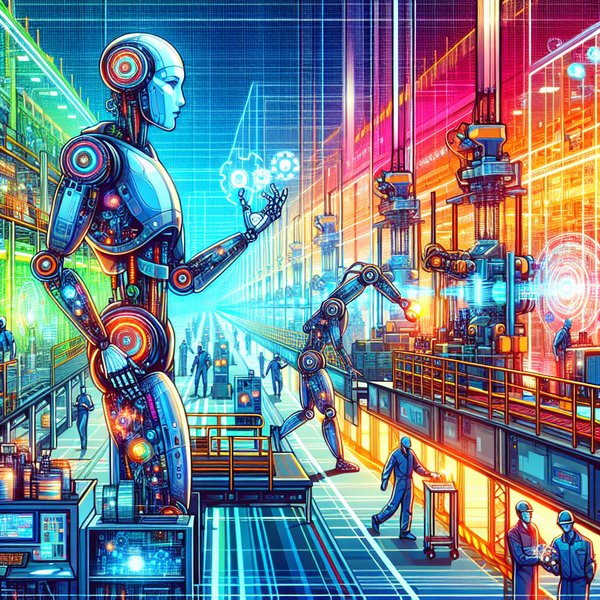
The field of robotics has long pursued a goal as simple to describe as it is challenging to achieve: enabling machines to understand what we want them to do and execute tasks as smoothly as a person would. With the rise of large-scale language models, a fascinating possibility emerges: using algorithms to enable robots to plan and move more naturally, bringing human-like planning to robots.
A team from the Tandon School of Engineering at New York University has introduced the BrainBody-LLM algorithm in the Advanced Robotics Research journal. This algorithm aims to mimic how our brain designs a plan and adjusts it in real-time within our body, allowing a robot to think about its actions and move its body accordingly in a repeated cycle.
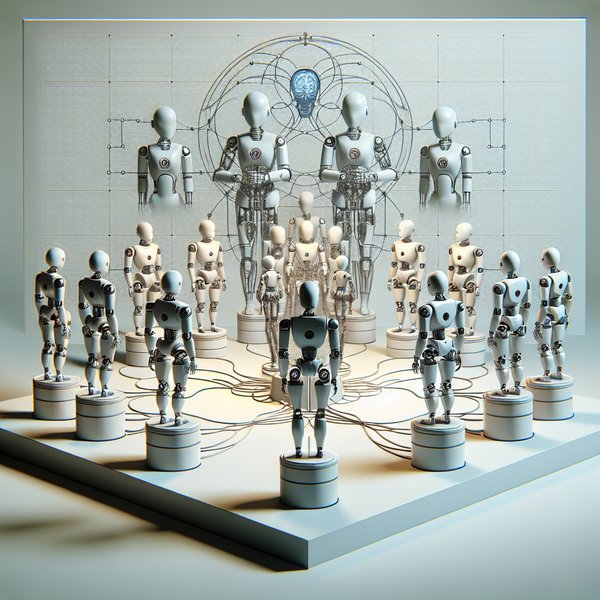
The researchers have devised the BrainBody-LLM to not only understand what needs to be done but also translate those plans into safe and precise movements. The algorithm divides the task into two parts: the Brain LLM handles the overall strategy by breaking down complex commands into simpler steps, while the Body LLM translates these steps into motor commands to execute actions like moving an arm or adjusting a gripper to pick up an object.
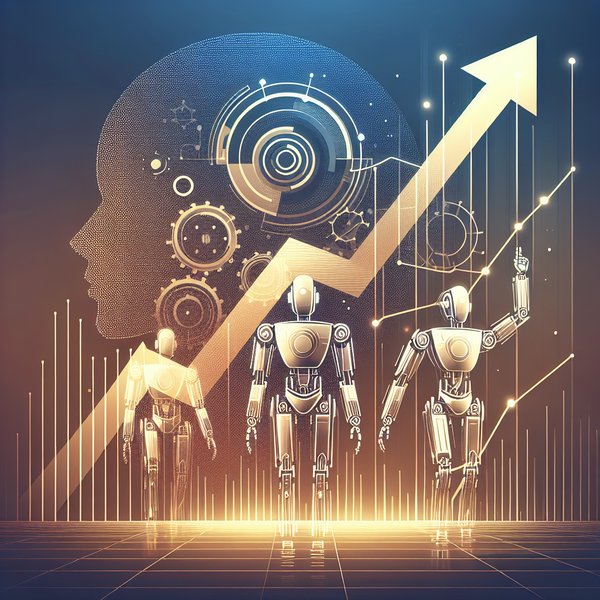
The key lies in continuous communication between the two models. The robot performs each step, checks for errors, and the system corrects them instantly, allowing it to adapt its actions based on the surrounding circumstances. The algorithm was tested in digital environments and with real robots, showing an increase of 17% in task completion rates and an average success rate of 84% compared to other models.
This approach of utilizing multiple language models to solve complex problems reflects a growing trend in AI development. By enabling robots to not only receive instructions but also understand, anticipate, and correct situations independently, the future could involve enhancements like 3D vision, sensors, and improved motion control for robots to respond to visual information and not just verbal commands. BrainBody-LLM represents a significant step towards robots that can plan and adjust their actions akin to humans, potentially ushering in a new era of AI-powered robotics.
About the Author