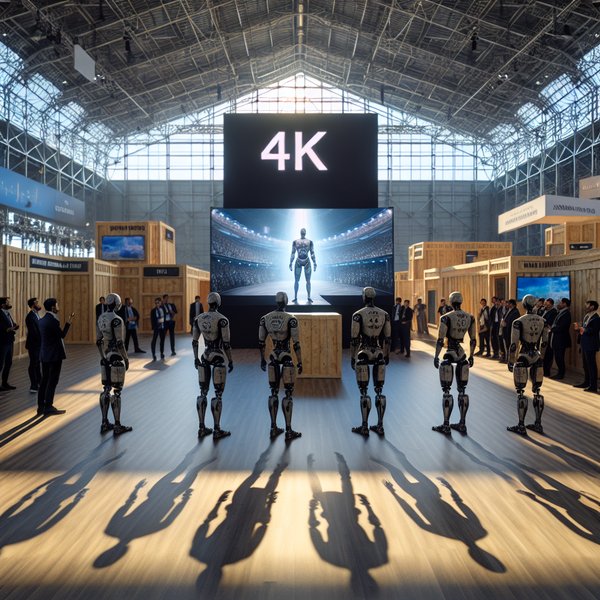
A recent technology expo at Kish Inox recently grabbed attention due to its “humanoid robot” showcase, which turned out to be human performers in intricate costumes rather than actual robots. The event drew significant online buzz after footage from a cybersecurity booth went viral, revealing male and female performers donning patterned jumpsuits and metallic makeup, mimicking robotic movements and delivering tech-heavy scripted lines.
Despite attempts to pass off the performers as advanced robots, keen-eyed viewers on social media quickly identified telltale signs of their human nature, such as natural skin tones, subtle expressions, and makeup textures. This discovery sparked a wave of speculation and amusement online, casting doubt on the authenticity of the expo’s presentation.
Expo organizers later clarified that the individuals on stage were hired performers delivering a theatrical act rather than actual robots. They emphasized that the showcase was never intended to deceive viewers but rather to add an engaging element to the booth’s cyber-related services and attract visitors.
Although the incident caused confusion, it inadvertently increased the event’s visibility, drawing a large audience both at the expo and online. This turn of events underscored the thin line between creative showcasing and misinterpretation in the tech sphere. Despite the mix-up, the expo stood by its core goal of promoting innovation and technological creativity from Iran’s expanding digital sector.
The expo’s mishap has become a topic of discussion across various social platforms, shedding light on the importance of clear communication in tech exhibitions. By maintaining its commitment to showcasing Iran’s technological advancements, the expo aims to continue fostering innovation and creativity within the digital landscape.
About the Author