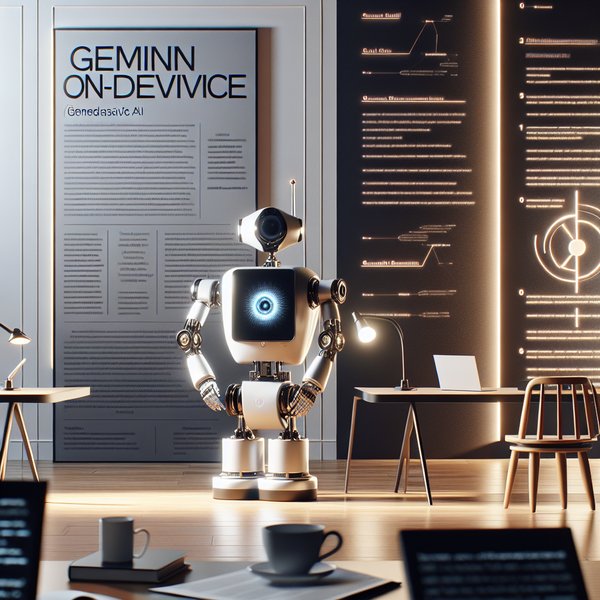
Gemini, known for its diverse capabilities such as text generation, poetry writing, article summarization, and image creation, has expanded its horizons into the realm of robotics with Gemini Robotics. The new Gemini Robotics On-Device model marks a significant advancement by eliminating the reliance on a network connection. This new model, coupled with a comprehensive software development kit (SDK), empowers roboticists to train robots for a myriad of tasks.
Introduced by Google in March, Gemini Robotics aims to leverage Gemini’s prowess in multimodal reasoning and world understanding to enhance physical robots’ capabilities. The initiative unveiled two innovative AI models. The first model, Gemini Robotics, is a cutting-edge vision-language-action (VLA) system based on Gemini 2.0. It integrates physical actions as a new output feature, enabling direct control of robots. The second model, Gemini Robotics-ER, leverages Gemini’s expertise in spatial comprehension, allowing roboticists to harness embodied reasoning capabilities for custom programs.
Initially, these models required high-performance computing systems, necessitating a connection to remote cloud servers for processing. This limitation hindered use cases where robots lacked continuous internet access or operated under real-time constraints sensitive to network latency. To address these challenges, DeepMind introduced Gemini Robotics On-Device, a foundational model tailored for bi-arm robots. This model is engineered to be computationally efficient, enabling rapid experimentation in dexterous manipulation tasks with minimal resources.
Gemini Robotics On-Device excels in visual, semantic, and behavioral generalization, empowering robots to interpret natural language commands and execute intricate tasks like folding clothes or manipulating objects with precision. Moreover, the model’s adaptability extends to different robotic systems, showcasing its versatility across varying platforms. Despite its compact design, Gemini Robotics On-Device delivers remarkable performance in a spectrum of real-world scenarios, responding promptly to commands and performing tasks autonomously.
DeepMind also launched the Gemini Robotics SDK, enabling developers to assess the model in simulated environments using the MuJoCo physics engine. This SDK facilitates quick customization for specific applications, showcasing the model’s capability to learn new tasks with minimal demonstration examples. The convergence of AI and robotics, exemplified by projects like Boston Dynamics Atlas, signals a new era where robots are becoming increasingly adept at serving a wide range of functions.
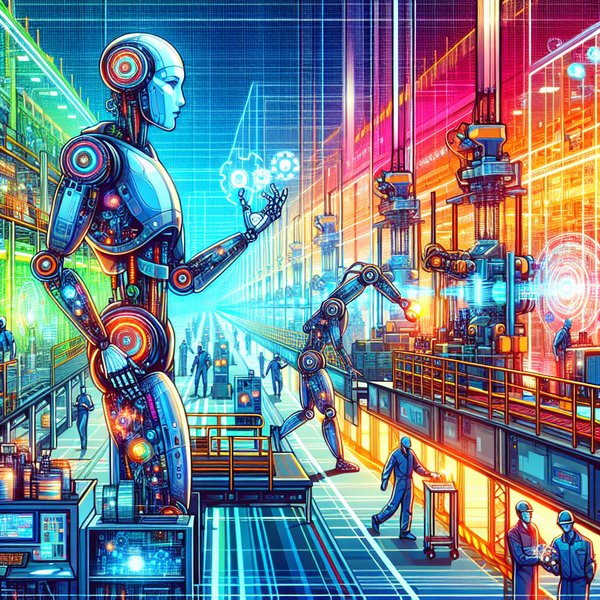
In conclusion, the integration of AI-driven solutions like Gemini Robotics On-Device into robotic systems heralds a future where robots proficiently execute complex tasks independently, opening doors to unprecedented possibilities in various industries. The symbiosis between artificial intelligence and robotics continues to redefine the landscape of automation, propelling us closer to a world where intelligent machines seamlessly augment human capabilities.
About the Author