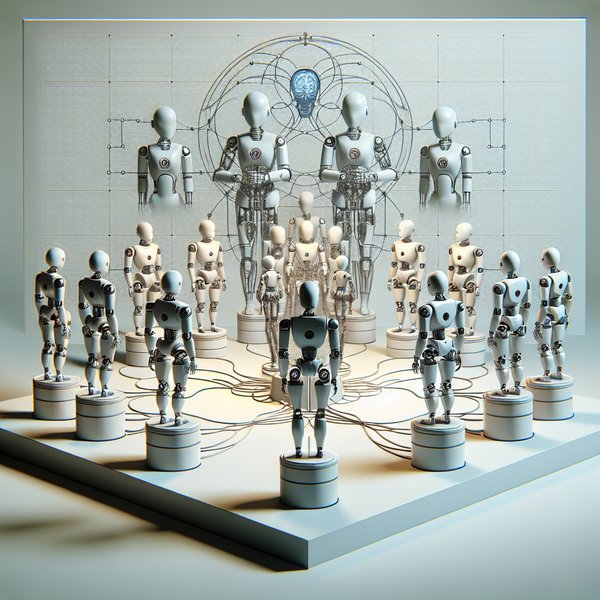
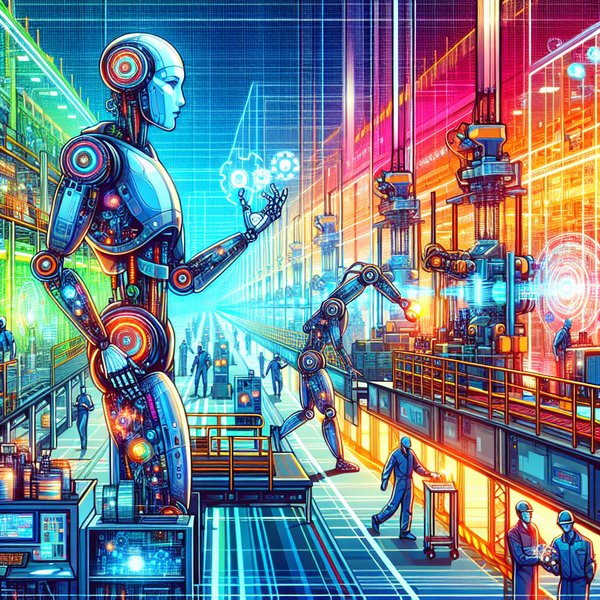
NVIDIA has introduced an innovative AI initiative focused on developing humanoid robots with the ability to acquire new skills and tackle intricate tasks through the study of human behavior. This cutting-edge project involves the unveiling of Jetson Thor, a sophisticated computing platform tailored for these humanoid robots. Moreover, the company has announced significant enhancements to its Isaac robotics platform, which now includes generative AI foundation models and tools for AI workflow.
Referred to as Generalist Robot 00 Technology (GR00T), the new project aims to act as a foundation for robots to interpret natural language, imitate movements by observing human actions, and swiftly acquire coordination, dexterity, and other essential skills to operate, adapt, and interact in the real world. During a keynote presentation, NVIDIA’s founder and CEO, Jensen Huang, showcased real-life robots utilizing the GR00T platform to carry out diverse tasks. He also demonstrated how these robots can enhance their abilities through a digital twin in the newly introduced Isaac Lab virtual reality simulation.
Huang emphasized the importance of developing base models for general humanoid robots, stating that it is one of the most exciting challenges in the field of AI today. He mentioned that advancements in enabling technologies are now equipping leading roboticists worldwide to make significant strides in artificial general robotics. Jonathan Hurst, the co-founder and chief robot officer of Agility Robotics, also revealed a collaboration with NVIDIA, expressing optimism that AI advancements will enable robots like his company’s Digit to assist individuals in various aspects of daily life.
In a previous statement, Huang predicted that AI would revolutionize the business landscape and transform job roles permanently, cautioning that those hesitant to embrace this technology may be left behind. A recent survey from Washington State University revealed that about a third of American workers are apprehensive that AI could render certain jobs obsolete, while almost half are concerned about falling behind in their careers if they fail to adapt to technological advancements in the workplace.
Concerns about the risks associated with AI have been raised by numerous researchers and tech figures, including Tesla CEO Elon Musk and Apple co-founder Steve Wozniak. These individuals, along with others, signed an open letter advocating for a temporary halt to “giant AI experiments” to establish guidelines that mitigate the misuse of this technology.
About the Author