The Role of Robots in Modern Industries
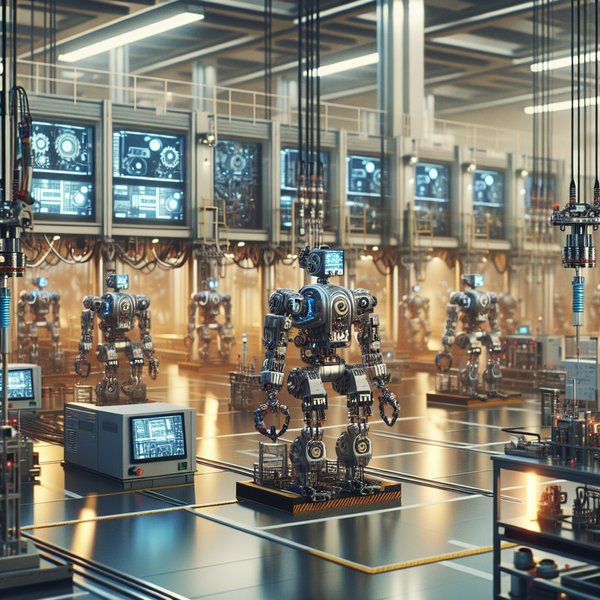
In today’s rapidly advancing technological landscape, robots are no longer seen as mere novelties but have become indispensable assets driving efficiency across various sectors. As we approach the midpoint of 2025, robotics advancements are revolutionizing how businesses operate, from manufacturing facilities to service-oriented industries.
Experts in a recent article on TechXplore emphasize that robots are increasingly integrated into daily operations to boost productivity and minimize human errors. This transformation is largely powered by advancements in artificial intelligence (AI) and machine learning, enabling robots to execute intricate tasks with unparalleled precision. The amalgamation of AI into robotics has facilitated real-time decision-making and adaptive behaviors. For instance, robots now excel in predictive maintenance, foreseeing potential failures to minimize downtime in industrial environments.
Publications such as the International Federation of Robotics have highlighted in their Top 5 Global Robotics Trends 2025 the impact of generative AI in training robots for diverse applications, aptly described as a “ChatGPT moment” for physical AI. Sectors like automotive and warehousing demonstrate how task-specific robots are surpassing general-purpose humanoids in practical deployment, showcasing the tangible benefits of this integration.
AI-Driven Autonomy and Human-Robot Collaboration
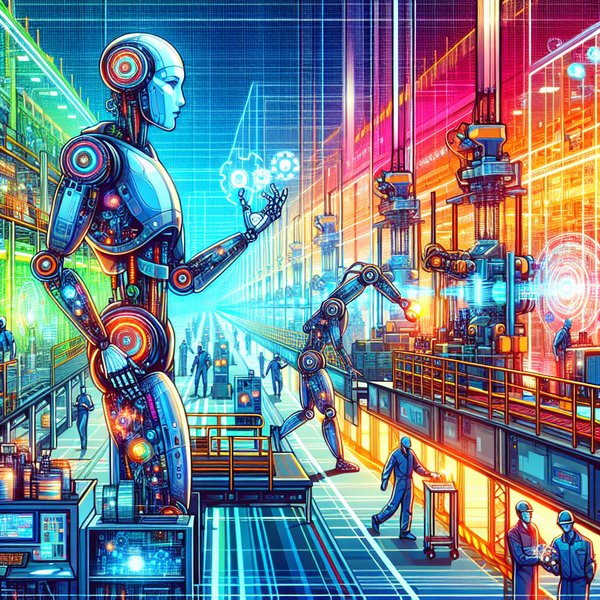
Enhanced autonomy stands out as a key element of the 2025 robotics landscape. Robots equipped with advanced AI capabilities can interpret data, identify patterns, and adapt to changing environments dynamically. A report by Robotnik on Robotic Trends in 2025 underscores how this autonomy leads to cost savings and enhanced operational efficiency. In collaborative settings, known as “cobots,” humans and robots operate alongside one another, aided by AI to facilitate seamless communication. This evolution is especially transformative in precision manufacturing, where articulated robots are prevalent, as detailed in a GlobeNewswire analysis projecting substantial market growth in automation for the automotive and electronics industries.
Furthermore, fast-learning robots are accelerating this evolution. MIT Technology Review’s feature on 10 Breakthrough Technologies 2025 explains how AI advancements allow robots to grasp new tasks almost instantaneously, bypassing traditional lengthy training periods. This capability is particularly crucial for industries necessitating flexibility, such as logistics, where robots efficiently manage variable payloads with remarkable consistency.
Market Projections and Geopolitical Implications
Looking towards the future, the global robot market is poised to reach $258.3 billion by 2035, with a projected 16.6% compound annual growth rate, as per Future Market Insights. This growth is propelled by innovations like humanoid robots, yet industry experts anticipate task-specific models to lead in 2025 due to their cost-effectiveness and higher efficiency.
Discussions on platforms like X reflect public sentiments, with users deliberating on the possibility of humanoid robots saturating markets, potentially reshaping labor costs on a global scale. However, challenges remain, including ethical considerations and scalability issues. WebProNews’s overview of 2025 Tech Trends points to regulatory barriers and the imperative need for investments in talent and infrastructure to navigate these advancements successfully. In industries such as healthcare and logistics, sustainable robotics are gaining traction, promising to revolutionize supply chains.
Innovations in Dexterity and Real-World Applications
The realm of robotic dexterity is on the brink of significant advancements, as influenced by experts like Mario Nawfal, who anticipate substantial progress in the coming year, propelling robots to operate in unpredictable environments with heightened safety. Technologies such as “roboforming,” employing dual robotic arms for metal shaping sans molds, could potentially revolutionize U.S. manufacturing by expediting production launches.
As robots evolve into versatile tools, their impact on human life is profound. Simplilearn’s article on The Future of Robotics postulates that AI integration will make robots seamlessly integrated into daily life, much like smartphones are today. Industry insiders are urged to navigate these advancements astutely, balancing innovation with the implications for the workforce to harness their full potential.
About the Author